
Understanding Casino Probability for Strategic Play
At its core, any casino game, from the simplest slot machine to the most complex table game, operates on the principles of probability. Understanding these underlying probabilities is not about predicting the future but about making informed decisions that can positively influence your long-term outcomes. Casinos are businesses designed with a built-in house edge, meaning the odds are statistically in their favor over an extended period. However, this doesn’t preclude players from employing strategies that leverage probability to minimize losses and maximize winning opportunities, and for those interested in a broader spectrum of betting, exploring options like 1win sports betting can also be part of a comprehensive approach to wagering.
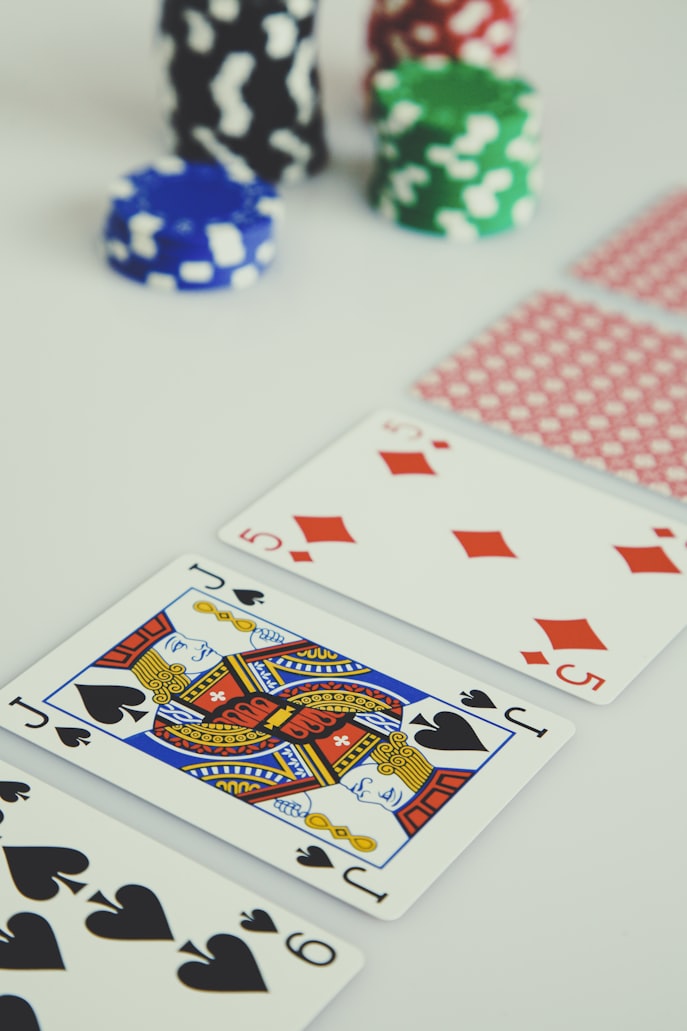
For instance, in games like blackjack, probability dictates the best course of action based on the player’s hand and the dealer’s upcard. Basic strategy charts, derived from extensive probability calculations, provide players with the mathematically optimal move in any given situation. Similarly, in craps, understanding the probabilities associated with different dice rolls allows players to make more advantageous bets. The key is to move beyond pure chance and into a realm of calculated risk.
Leveraging Mathematical Advantage in Table Games
Table games often offer more opportunities for strategic play rooted in probability than many other casino offerings. Games like blackjack, roulette, and craps have clearly defined rules and payout structures that allow for deep analysis. By understanding the mathematical expectation of different bets or plays, players can identify options that offer a lower house edge. This is where true casino strategy begins – not by finding a way to beat the house consistently, but by minimizing the inherent disadvantage.
For example, in roulette, while all bets are subject to the wheel’s inherent probability, some bets carry a lower house edge than others. Outside bets, like red/black or odd/even, offer higher probabilities of winning on any given spin, albeit with lower payouts. Conversely, inside bets on single numbers offer higher payouts but much lower probabilities of success. A strategic player will focus on understanding these differences and aligning their betting patterns with a probability-conscious approach, potentially exploring systems that manage bankroll alongside probability considerations.
Probability in Slot Machines: Myth vs. Reality
Slot machines, often perceived as purely games of chance, are also governed by probability, though the mechanics are different from table games. Each spin on a slot machine is an independent event, determined by a Random Number Generator (RNG). The RNG constantly generates numbers, and the moment a player presses “spin,” the machine stops at a particular set of symbols based on the RNG’s output at that precise instant. This means past results have absolutely no bearing on future outcomes.
While players cannot influence the RNG, understanding slot machine probabilities can still be beneficial. This involves understanding the concept of Return to Player (RTP), a theoretical percentage of wagered money that a slot machine is programmed to pay back to players over a very long period. Higher RTP percentages indicate a lower house edge. Furthermore, players can strategize by choosing games with higher volatility (meaning larger but less frequent wins) or lower volatility (smaller but more frequent wins) based on their risk tolerance and bankroll management goals, all informed by the game’s probabilistic design.
The Role of Odds and Payouts in Strategic Betting
Understanding the relationship between odds and payouts is fundamental to any probability-based casino strategy. The odds represent the likelihood of a particular outcome occurring, while the payout is the amount you win if that outcome materializes. In a fair game, the payout would be directly proportional to the odds – a lower probability outcome would yield a higher payout. However, in casino games, the payout is deliberately set lower than the true odds to create the house edge.
A strategic player uses this knowledge to evaluate the value of different bets. If a bet offers a payout that is disproportionately low compared to its probability of winning, it’s a strategically unfavorable bet. Conversely, bets that offer a better payout-to-probability ratio are more attractive, even if they still carry a house edge. This is particularly relevant in games like craps or certain sports bets offered within a casino environment, where players can analyze various betting options based on their respective odds and payouts.

Navigating Probability at Online Casinos and Platforms
Online casinos, much like their land-based counterparts, operate on strict probabilistic models. The RNGs used in online slots and digital table games are rigorously tested and certified to ensure fairness and randomness. Players can approach online gaming with the same strategic mindset, focusing on games with higher RTP percentages and lower house edges. Many reputable online platforms, including those that might be considered when looking for reliable casino insights, are transparent about their game mechanics and often provide RTP figures.
When exploring online casino options, it’s crucial to consider platforms that offer a comprehensive range of games with clearly defined probabilities. For players seeking to unlock elite winning strategies through probability, focusing on sites that provide detailed information about game mechanics, payout structures, and perhaps even offer resources or guides on probability-based play can be highly advantageous. The digital realm allows for easy access to a vast array of games, making it essential to use probability insights to select those that align best with a strategic, informed approach to gambling.